Can a Handyman Mount TVs in a Condo?
Yes, a handyman can usually mount TVs and hang pictures in condos—if your building rules and schedule line up. Here’s what to check before you book a visit.
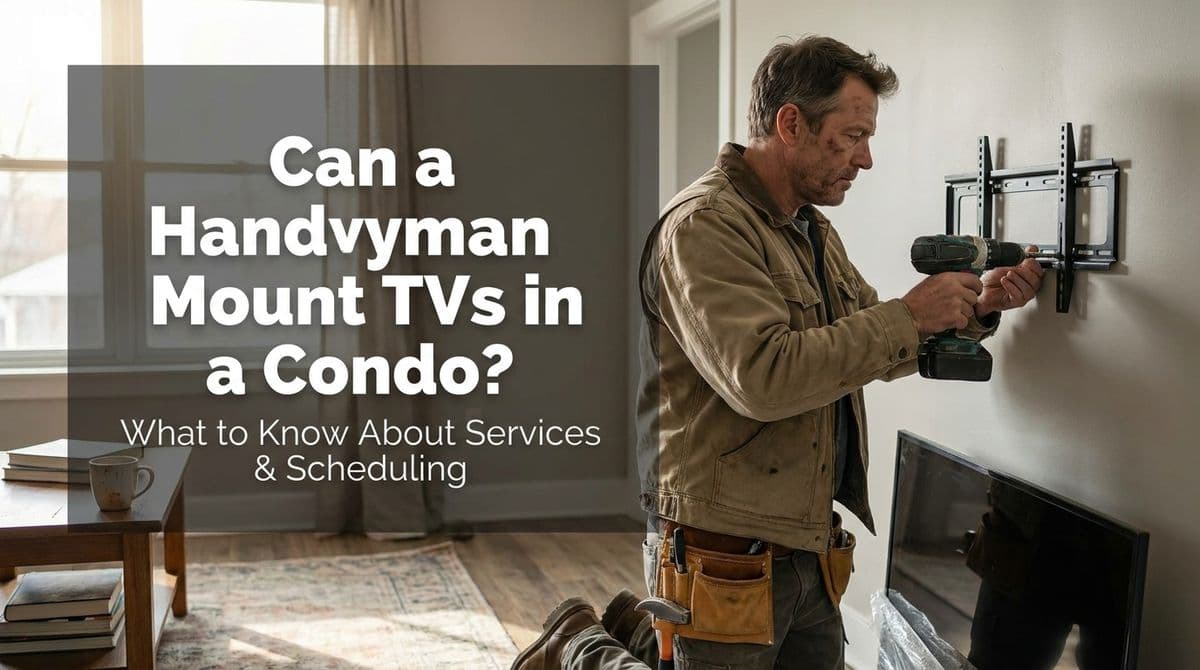
We recently got a call from a condo owner — let’s call him Mike — who lives near a busy city park and needed some help inside his place. Mike wanted six or seven pictures and paintings hung, plus a TV mounted on the wall. The catch? He works regular business hours and could only do it on the weekend.
That call turned into a really helpful conversation about what a handyman can and can’t do in a condo, how our scheduling works, and why building rules matter more than most people realize. We thought we’d share the same guidance we gave Mike so you know what to expect before you book a visit.
What a Handyman Can (Usually) Do in a Condo
In most condo buildings, a handyman service like ours can absolutely help with:
- Mounting TVs on drywall, masonry, or wood-framed walls
- Hanging art, mirrors, and pictures (from a few pieces to a whole gallery wall)
- Installing shelves or small wall-mounted cabinets
- Minor touch-ups around the mounting area (like filling old holes)
What sometimes surprises condo owners is that the building may have rules about how and when that work can be done. Our team can safely mount and hang just about anything, but we still have to play by your HOA or management company’s rules.
Condo & HOA Rules to Check Before You Schedule
When we talked with Mike, our team asked a simple question: “Have you checked your building’s rules yet?” He hadn’t, and that’s extremely common. Before you schedule any handyman work in a condo, it’s smart to:
- Look for a “contractor rules” or “renovation rules” section in your HOA documents or welcome packet.
- Ask the front desk or property manager if there are any restrictions on drilling into walls.
- Confirm allowed work hours (many condos restrict noisy work to weekday daytime hours).
Here are a few specific questions we recommend asking your HOA or building manager:
- “Are there any limits on mounting TVs or drilling into interior walls?”
- “Do I need to submit a work request or contractor form first?”
- “Are weekend appointments allowed, or only Monday–Friday?”
- “Is there a preferred elevator or entrance for contractors?”
- “Do you have quiet hours we need to avoid?”
Getting these answers ahead of time prevents surprises like a security guard turning us away or a neighbor complaint halfway through your TV install.
Common Condo Wall Types and Why They Matter
Another thing we walked through with Mike was the type of walls in his condo. Not all walls are the same, and the right mounting method depends on what we’re drilling into. In condos, we typically see:
- Standard drywall over wood or metal studs – Most common. Great for TVs and art when we can hit studs or use the right anchors.
- Concrete or masonry walls – Common on exterior walls or high-rise buildings. Requires special masonry bits and anchors.
- Fire-rated or demising walls – Walls between units or hallways that may have extra rules about penetrations.
For a TV mount, we almost always want to secure the bracket into studs or use a mounting system rated for your specific wall type and TV weight. For pictures and artwork, we pick anchors based on both the wall material and the weight of each piece. This is one of the biggest safety differences between DIY and hiring a pro.
How Our Pricing and Time Minimums Work
Mike asked a very practical question: “How much is this going to cost?” For our handyman services, we explained our standard structure:
- Hourly rate: For example, $90 per hour (your local rate may vary).
- Three-hour minimum: That means a minimum charge equivalent to three hours of work.
- Materials: Extra if we supply specialty anchors, brackets, or other hardware.
A three-hour minimum often covers a lot of condo tasks: hanging multiple pictures, mounting a TV, adjusting a few doors, fixing a loose towel bar, and more. When you’re paying for a block of time, we always suggest making a short punch list so you get the most value out of that visit.
Weekends, Scheduling, and Building Access
Where things got tricky for Mike was scheduling. He could only be home on weekends, and our team explained that while we can answer calls and book appointments seven days a week, most of our field work is scheduled during weekday daytime hours.
Even when a handyman is available on weekends, condos themselves often add limits:
- Work-hour rules: Some buildings don’t allow drilling, hammering, or contractor work on weekends at all.
- Elevator reservations: A service elevator may need to be booked in advance for equipment.
- Access requirements: Security desks may require contractor badges, insurance certificates, or pre-approval.
To keep things smooth, our team usually recommends one of these options:
- Meet us first thing on a weekday morning before you head to work.
- Arrange for a trusted neighbor, friend, or concierge to let us in and lock up.
- Check if your building allows key release to licensed contractors.
A quick conversation with your building manager plus our office can usually find a window that works for both your schedule and your condo’s rules.
DIY vs Hiring a Pro: Safety and Peace of Mind
Many condo owners start out thinking, “It’s just a few holes in the wall, how hard can it be?” Here are a few reasons people end up calling us instead:
- Hidden utilities: In multi-unit buildings, plumbing lines, fire sprinklers, and electrical runs can be closer to the surface.
- Heavy items: Large TVs, mirrors, and artwork need proper anchors to stay put.
- Neat finishes: Straight, level lines and minimal wall damage matter in a condo where space is tight.
If you decide to DIY, we always suggest:
- Using a stud finder and a voltage detector before drilling.
- Choosing anchors rated for the weight of your item and wall type.
- Starting with the lightest pieces to get a feel for the wall.
- Stopping immediately if you hit unexpected resistance, moisture, or unusual dust.
When you hire a professional handyman, you’re paying for the tools, experience, and insurance that keep your walls — and your neighbors’ — safe.
How to Get Ready for Your Handyman Visit
Once Mike understood the building rules and scheduling realities, he asked what he could do to make the visit go faster. Here’s the checklist we shared with him (and share with most condo customers):
- Confirm HOA rules and work hours before you book.
- Have your TV, mount, and cables ready and in the room where they’ll be installed.
- Lay out your pictures and art roughly where you want them on each wall.
- Clear furniture away from walls so we have room to work and set up a ladder, if needed.
- Decide on heights (eye level, center of wall, over furniture) so we’re not guessing.
A little prep on your side means we can spend more of that three-hour block getting things done and less time moving furniture or hunting for the right cables.
If you live in a condo and you’re not sure what’s allowed, our team is always happy to talk through your specific situation, help you understand your options, and schedule work that fits both your building rules and your lifestyle.